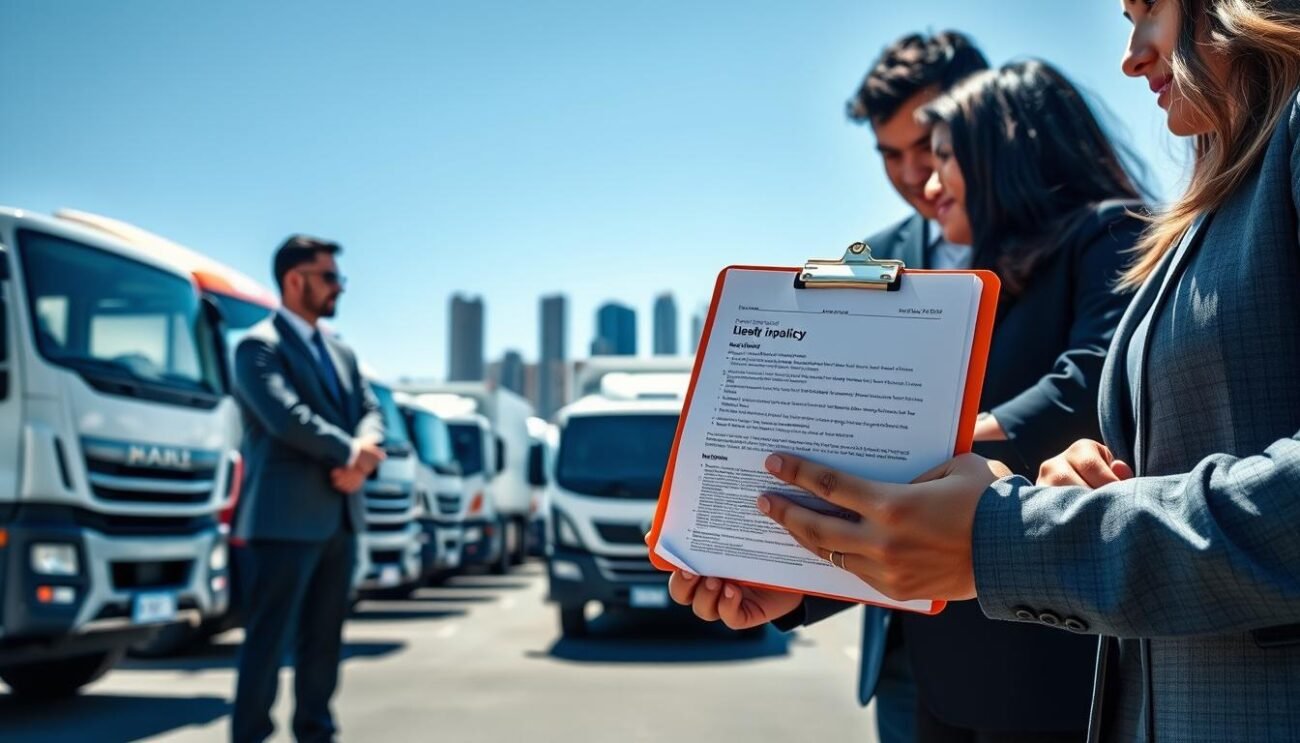
Businesses that use many vehicles need to protect them. Commercial vehicle insurance covers many vehicles well.
Having the right insurance coverage helps businesses keep going, even when things go wrong. It also helps avoid big money losses. It keeps vehicles safe from many dangers.
Getting the right fleet insurance keeps vehicles safe. It helps businesses stay running smoothly. This insurance is key for companies to handle risks and cover their vehicles well.
Key Takeaways
- Commercial vehicle insurance provides complete coverage for businesses with many vehicles.
- The right insurance coverage keeps businesses running and saves money.
- Fleet insurance is very important for businesses that use vehicles a lot.
- It protects against many dangers of owning and using vehicles.
- Getting fleet insurance helps keep businesses going.
What is Fleet Insurance?
Fleet insurance is a way to insure many vehicles with one policy. It’s great for businesses with lots of cars. It makes managing insurance easy and can save money.
Definition and Overview
Fleet insurance is also called business auto insurance. It covers many vehicles with one policy. It’s perfect for companies that use cars for work, like delivery or service.
By having one policy for all vehicles, businesses can manage insurance better. They might even save money.
Key Features
Fleet insurance has many important features. It offers full coverage and liability protection. It also has flexible options to fit your business needs.
Full coverage helps protect vehicles from accidents, theft, and more. Liability protection helps if someone gets hurt or property gets damaged. You can adjust your policy to fit your business.
Here are some main benefits of fleet insurance:
| Feature | Description | Benefit |
|---|---|---|
| Comprehensive Coverage | Covers damages to vehicles due to accidents, theft, or other events | Protects business assets |
| Liability Protection | Covers bodily injury and property damage to others | Reduces financial risk |
| Flexible Policy Options | Allows customization of insurance coverage | Tailors insurance to business needs |
Why Fleet Insurance is Essential for Businesses
For companies with many vehicles, insurance is a must. It keeps them safe from big money losses. Fleet insurance helps protect businesses from many risks.
Protecting Financial Assets
Fleet insurance is key for keeping a business’s money safe. It covers vehicles against accidents, theft, and damage. As Mark McCrary, CEO of GlobalTranz, says, “Fleet insurance is vital for companies to handle risks and keep going, even when things go wrong.”
“Having the right insurance coverage can be the difference between recovering from an accident and facing financial devastation.”
Reducing Liability Risks
Fleet insurance also lowers liability risks. If a company car gets into an accident, the business might have to pay for damages. Insurance helps cover these costs, easing the financial load.
By getting fleet management insurance or company car insurance, businesses stay safe. This smart move keeps them running smoothly and financially stable.
Types of Fleet Insurance Coverage Available
Protecting your business vehicles is key. Knowing about fleet insurance is important. It helps keep your business safe.
Comprehensive Coverage
Comprehensive coverage protects your vehicles from theft, vandalism, and more. It helps your business stay running even when things go wrong.
Liability Coverage
Liability coverage helps when your vehicle causes an accident. It covers damages and medical costs. It’s a must for businesses to stay safe.
Collision Coverage
Collision coverage fixes your vehicles after a crash. It’s key to keep your business moving without a hitch.
Let’s look at how these coverages work:
| Coverage Type | Description | Example |
|---|---|---|
| Comprehensive | Covers non-collision damages | Theft, vandalism, natural disasters |
| Liability | Covers costs associated with at-fault accidents | Damages to other vehicles, property, medical expenses |
| Collision | Covers damages from collisions | Accidents involving company vehicles |
For more info on car insurance, check out Rebixy. They have plans for businesses.
How to Choose the Right Fleet Insurance Policy
There are many fleet insurance options out there. Businesses need to pick the right one. To do this, they must understand their needs and compare different providers.
Assessing Your Business Needs
To find the right fleet insurance, first look at your business. Think about the vehicles, how they are used, and your drivers’ history. Here are important things to think about:
- The number and types of vehicles in your fleet
- The primary use of your vehicles (e.g., delivery, transportation, service calls)
- The experience and driving records of your drivers
- Any additional coverage needs, such as comprehensive or collision coverage
Knowing these things helps you figure out what coverage you need. It also helps you see if your fleet has special needs.
Comparing Insurance Providers
After knowing what you need, it’s time to compare insurance providers. Look at different companies that offer fleet insurance. Check their policies against these criteria:
- Coverage options and limits
- Premium costs and payment terms
- Deductibles and out-of-pocket expenses
- Claims handling and customer service reputation
- Additional services or benefits offered
Reading reviews and asking for advice from others in your field is also smart. By looking at these points, you can find the best insurance for your business.
Choosing the right motor fleet insurance policy takes time and effort. You need to understand your business well and compare insurance providers carefully. This way, you can get a policy that covers you well and supports your business.
Factors That Affect Fleet Insurance Premiums
It’s important for businesses to know what affects fleet insurance costs. Fleet insurance rates change based on different risks. This means each business pays differently.
Key Factors Influencing Fleet Insurance Premiums
Vehicle Types and Models
The kind of vehicles in your fleet affects your insurance rates. Some cars cost more to insure because they are pricey, hard to fix, or prone to accidents.
- Luxury cars usually cost more to insure because they are expensive and hard to repair.
- Cars with safety features might cost less because they are safer.
- Big trucks or special vehicles might have different rates than regular cars.
Driver History and Experience
How your drivers drive and their experience also matters. A fleet with safe, experienced drivers can save money on insurance.
- Drivers with no accidents and lots of experience pay less for insurance.
- Drivers with accidents or tickets might make your rates go up.
- Teaching your drivers to be safer can lower your insurance costs.
Knowing and managing these factors helps businesses deal with commercial vehicle insurance and business auto insurance better. This can lower their fleet insurance costs.
Benefits of Fleet Insurance for Businesses
Fleet insurance helps businesses in many ways. It can make insurance cheaper and easier to manage. By covering all vehicles under one policy, businesses can save money and simplify their insurance tasks.
Cost Savings Over Individual Insurance
Fleet insurance can save businesses money. It’s cheaper than insuring each vehicle separately. Insurance companies give discounts for fleet policies because they’re easier to manage and less risky.
- Reduced administrative burdens due to a single policy
- Potential for lower premiums with fleet insurance
- Simplified renewal processes for all vehicles
Choosing fleet insurance can save businesses a lot of money. This is very helpful for big fleets. It lets businesses use their money better.
Streamlined Administration
Fleet insurance makes managing insurance easier. It’s simpler to handle one policy for many vehicles than many separate ones. This makes insurance cheaper and less complicated to manage.
- Single policy renewal dates simplify tracking and management
- Consolidated claims processing reduces paperwork
- Easier management of vehicle records and insurance documents
In short, fleet insurance is very good for businesses. It saves money and makes things easier to manage. Knowing these benefits helps businesses make smart insurance choices and work better.
Common Exclusions in Fleet Insurance Policies
Fleet insurance policies have some exclusions. If you don’t know about them, it can be very risky for your business. It’s important to understand these exclusions to manage your insurance well.
Uninsured Drivers
Many fleet insurance policies don’t cover damages from uninsured drivers. If an accident happens with someone without insurance, your insurance might not help unless you have special coverage.
To avoid this risk:
- Make sure all drivers are licensed and trained.
- Think about adding uninsured motorist coverage to your policy.
- Check your drivers’ records often to spot any risks.
Vehicle Modifications
Another big exclusion is damage from unauthorized vehicle changes. If you change your vehicles without telling your insurance, you might lose coverage if there’s an accident or damage.
How to stay safe with vehicle changes:
- Tell your insurance before making any changes.
- Keep a record of all vehicle changes.
- Know how changes might change your premiums and coverage.
Knowing about these exclusions and taking steps to avoid them can help your business. This way, you can make sure you have the right insurance for your fleet.
How to File a Claim with Fleet Insurance
If your fleet vehicles get damaged, filing a claim quickly is key. It helps avoid long downtime and big financial losses. Here’s how to file a claim with your motor fleet insurance.
Step-by-Step Claim Process
First, tell your insurance provider about the damage right away. This step starts the claims process.
- Notify the Insurance Provider: Call your insurance company with the info in your policy.
- Provide Detailed Information: Give them the date, time, where it happened, and what happened.
- Submit Required Documentation: They’ll tell you what papers you need, like police reports and photos of the damage.
Required Documentation
Knowing what papers you need can speed up the claims process. Here’s a list of common ones for a fleet policy coverage claim.
| Document Type | Description |
|---|---|
| Police Report | A detailed report filed with the police, if there was a third party or a lot of damage. |
| Photographs of Damage | Clear images of the damage to the vehicles or property involved. |
| Repair Estimates | Quotes from authorized repair shops detailing the cost of repairs. |
Filing a claim with your fleet insurance needs focus and understanding. By following these steps and providing the right documents, you’ll have a smoother claims experience.
Mistakes to Avoid When Purchasing Fleet Insurance
Buying fleet insurance can be tricky. You might not get enough coverage or forget about deductibles. It’s important to protect your business from big financial risks.
Underestimating Coverage Needs
Many businesses don’t get enough insurance. This can cause big money problems if something bad happens. It’s key to think about what you really need.
Look at your fleet’s needs carefully. Think about the types of vehicles, your drivers, and what you do. This helps you get the right insurance.
“A well-structured fleet insurance policy can be the difference between a minor setback and a major financial crisis for businesses.”
Ignoring Deductibles
Don’t ignore deductibles when you buy insurance. Deductibles are what you pay first before insurance helps. Not thinking about them can lead to big surprises.
Check your policy’s deductibles. Think about how they might affect your money if you need to make a claim.
| Deductible Amount | Premium Cost | Out-of-Pocket Expense |
|---|---|---|
| $500 | $1,200 | $500 |
| $1,000 | $900 | $1,000 |
| $2,000 | $600 | $2,000 |
Knowing about deductibles helps you make better choices. It can save your business from big money problems.
The Role of Fleet Management in Insurance
How a company manages its fleet affects its insurance costs. Good fleet management keeps vehicles in top shape. It also helps set insurance prices. By keeping vehicles well-maintained and training drivers, costs can go down.
Importance of Regular Vehicle Maintenance
Keeping vehicles in good shape is key. It lowers the chance of accidents from broken parts. This keeps the business safe and saves money on insurance.
Also, a well-kept fleet looks good to insurance companies. They see it as less risky. This can mean lower premiums and better coverage.
Training Drivers for Safety
Teaching drivers to drive safely is also important. It cuts down on accidents. This saves money on repairs and medical bills. It also keeps insurance costs low.
Driver training covers safe driving and following laws. It shows a company cares about safety. Insurance companies like this and may offer lower rates.
In short, good fleet management is key to saving on insurance. Focus on keeping vehicles in good shape and training drivers. This makes the business safer and more cost-effective. It’s good for the company’s bottom line and safety record.
Future Trends in Fleet Insurance
The world of fleet insurance is changing fast. New tech and business needs are leading the way. It’s key for companies to keep up to save money and get the best coverage.
Advancements in Technology
New tech is changing fleet insurance a lot. Telematics lets insurers watch vehicles live. This helps them make better policies.
More tech like AI and IoT will keep changing things. We’ll see even more new ways to manage fleets.
Predictive Analytics
Predictive analytics is big in fleet insurance now. It looks at driver habits and vehicle health. This helps insurers make better policies.
It also helps companies run their fleets better. This can lower their insurance costs.
As fleet insurance keeps changing, companies need to stay updated. Knowing the latest trends and tech helps them protect their assets. It also helps them manage risks well.
