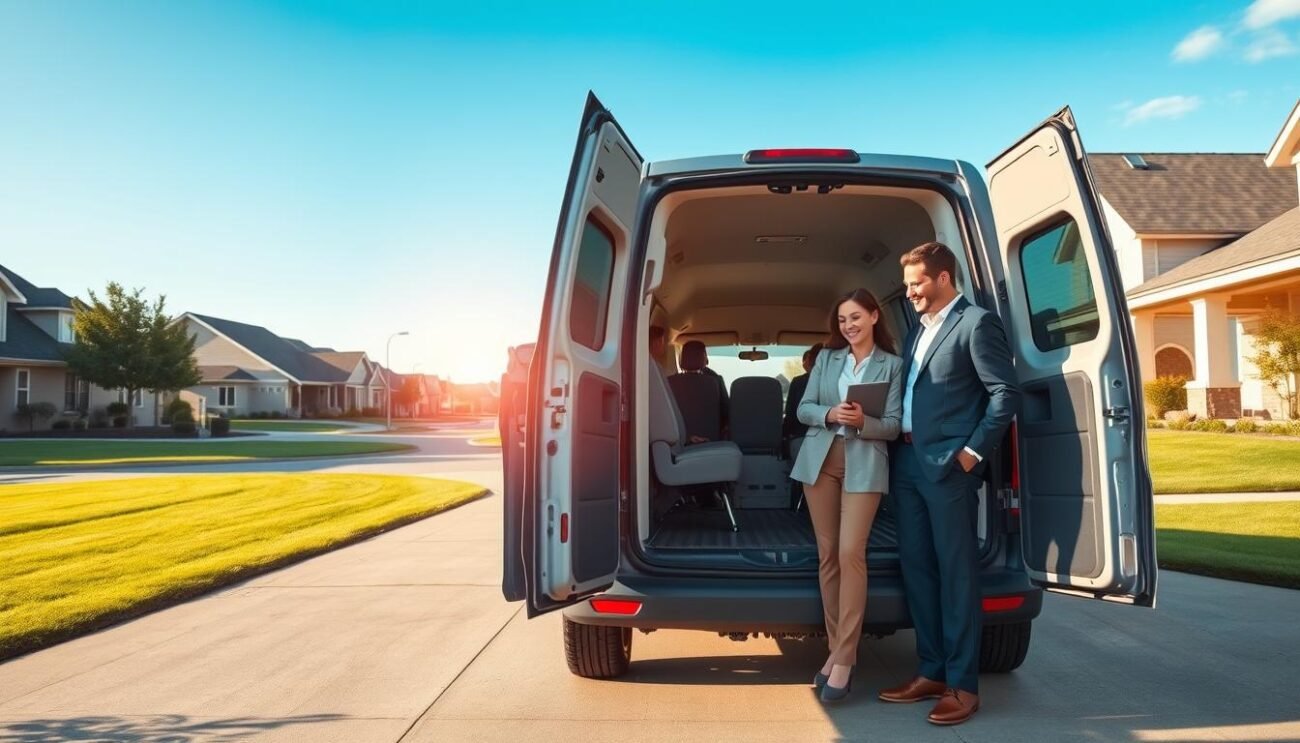
Finding the right van insurance can be tough for American drivers. There are so many choices, it’s easy to feel lost.
Van insurance helps protect drivers and their vans from big financial losses. This includes accidents or other unexpected events.
For American drivers, the right van insurance is key. It meets state rules and keeps you safe financially.
Key Takeaways
- Understanding van insurance is essential for American drivers.
- Commercial vehicle insurance can provide financial protection.
- Affordable van insurance options are available.
- State regulations require van insurance.
- Choosing the right van insurance can save money.
Understanding Van Insurance Basics
For many American drivers, knowing about van insurance is key. It helps protect their vehicles and keeps their finances safe. Van insurance covers risks like accidents, theft, and damage to others.
What is Van Insurance?
Van insurance, or van cover, protects vans from different risks. It is mandatory in the United States for van owners. The policy can cover the van, the driver, and others in an accident.
Why is Van Insurance Important?
Van insurance is very important. It gives financial protection in case of accidents or theft. It also helps pay for repairs or a new van. Plus, it’s the law in most states, and driving without it can lead to fines.
Having van insurance also gives drivers peace of mind. They know they’re safe from unexpected problems.
Types of Coverage Available
There are many types of van insurance coverage. They fit different needs and budgets. Here are some:
- Liability coverage, which covers damage to third parties.
- Collision coverage, which pays for damage to the van in an accident.
- Comprehensive coverage, which covers theft, vandalism, and natural disasters.
- Motor trade liability insurance and motor trade policy are for businesses using vans for work.
It’s important to know these options. This helps choose the right van insurance for you.
Factors Influencing Van Insurance Rates
Knowing what affects van insurance rates is key for American drivers. It helps them find motor trade cover that’s affordable. Insurance companies look at many things when setting prices. Knowing these can help drivers make smart choices.
Vehicle Type and Age
The van’s type and age matter a lot. Newer vans or those with safety features might cost less to insure. Older vans might cost more because of possible repair needs.
Also, the van’s make and model are important. Vans that cost more to fix or replace have higher insurance. For example, a new van with safety features is seen as safer than an older one without.
Driving History and Experience
A driver’s past and experience are key in figuring out insurance risk. Drivers with no accidents or tickets usually pay less. Those with claims or tickets pay more.
- Drivers with a clean record and lots of experience get lower rates.
- Accidents or tickets raise insurance costs a lot.
- Defensive driving courses can sometimes lower insurance costs.
Insurance companies see safe drivers as less risky. This means they can get better motor trade insurance brokers rates. Keeping a good driving record helps lower premiums.
Location and Usage
Where and how the van is used also affects rates. Urban areas with more crime or traffic can cost more. Vans used for work, like deliveries, might need different insurance than personal use vans.
For example, a van for city deliveries might cost more due to risk. But a van for personal trips in a quiet area might cost less.
By knowing these factors, American drivers can find better van insurance. Whether through motor trade insurance brokers or direct with companies, being informed helps get the right coverage at a good price.
How to Choose the Right Van Insurance
To make sure you’re covered, pick a van insurance that fits your needs. It’s important to know what you need, compare different options, and read the policy details carefully.
Assessing Your Coverage Needs
First, figure out what coverage you need. Think about your van’s type, value, and how you use it. For example, if you use your van for work, you might need motor trade insurance quotes to cover business risks.
Decide how much coverage you want. Do you need full coverage or just third-party insurance? Knowing what you need helps you find the right policy.
Comparing Different Insurance Providers
After knowing what you need, compare different insurance companies. Look at their motor trade insurance cost, what they cover, and how they treat customers.
Find insurers with flexible policies and good prices. Reading reviews and asking others can help you see if an insurer is reliable.
Reading Policy Fine Print
Always read the policy details before you sign up. Know what’s covered and what’s not. Look at the terms, conditions, and any extra fees.
By reading the policy well, you can avoid surprises. This way, you make sure you get the coverage you need without spending too much.
Benefits of Having Van Insurance
Van insurance is very important. It gives drivers financial safety and peace of mind. It’s a key part of being a responsible van owner, protecting against unexpected events.
Financial Protection Against Accidents
Van insurance helps a lot with accidents. It covers repair or replacement costs of your van. It also pays for medical bills for you and your passengers.
Key financial benefits of van insurance include:
- Coverage for vehicle repairs or replacement
- Medical expenses for you and your passengers
- Legal fees if you’re sued following an accident
Peace of Mind for Drivers
Van insurance also gives drivers peace of mind. It reduces stress and anxiety. You can drive safely, knowing you’re protected.
Consider the following table highlighting the impact of van insurance on driver stress levels:
| Aspect | With Van Insurance | Without Van Insurance |
|---|---|---|
| Financial Stress | Low | High |
| Driving Anxiety | Reduced | Increased |
| Overall Peace of Mind | High | Low |
Legal Requirements
In many places, van insurance is the law. Without it, you could face fines, penalties, or even lose your license. Having the right insurance keeps you legal.
Choosing the right van insurance is important. Think about your van, driving history, and budget. Look for cheap motor trade insurance or best motor trade insurance to find good deals.
Common Misconceptions About Van Insurance
The world of van insurance is full of myths and misconceptions. These can lead to costly mistakes and not enough coverage. Many drivers don’t know the truth about van insurance.
I Don’t Need Insurance for My Van
Many think van insurance is only for business use. But, it’s key for personal or small business use. It protects you from big financial losses in accidents or theft.
Even for personal use, the right insurance can save you money. For example, if you use your van for deliveries or small business, you might need motor trade insurance.
Only Commercial Vans Require Insurance
Some believe only commercial vans need insurance. But, any van on public roads must be insured. The type of insurance needed depends on how you use your van.
Here’s a table to help understand van insurance types:
| Type of Van Insurance | Description | Best For |
|---|---|---|
| Third-Party Only | Covers damages to others in an accident | Basic, legally required coverage |
| Third-Party, Fire, and Theft | Includes third-party coverage plus protection against fire and theft | Drivers seeking more coverage |
| Comprehensive | Covers third-party damages, plus damages to your van | Drivers who want full protection for their vehicle |
Knowing about van insurance types helps you choose the right coverage. Whether for personal use or business, the right insurance offers peace of mind and financial safety.
Tips to Lower Your Van Insurance Premium
Lowering your van insurance costs is easier than you think. A few simple steps can help you save money without losing coverage.
Bundling Policies for Discounts
One way to cut costs is by bundling policies. Many insurers give discounts for combining home, auto, and van insurance. This makes managing your insurance easier and can save you a lot.
- Multi-policy discount: Ask your insurer about discounts for bundling policies.
- Simplified management: Having all policies with one provider makes renewals and claims easier.
Maintaining a Clean Driving Record
Keeping a clean driving record is key to lower premiums. Insurers see drivers with accidents or tickets as riskier. Safe driving and avoiding claims show you’re a low-risk driver.
“A clean driving record can significantly impact your insurance premiums. Avoiding accidents and traffic infractions not only keeps you safe on the road but also saves you money on your van insurance.”
- Defensive driving courses: Some insurers offer discounts for these courses.
- Penalty-free driving: Driving within the law avoids fines and keeps costs down.
Choosing Higher Deductibles
Choosing a higher deductible can lower your premium. A deductible is what you pay before insurance covers a claim. A higher deductible means more out-of-pocket costs but lower premiums.
| Deductible Amount | Premium Cost |
|---|---|
| $500 | $800/year |
| $1000 | $600/year |
Think carefully about the savings against the higher deductible. Make sure it’s a good financial choice for you.
The Role of Credit Score in Insurance Rates
Your credit score affects your van insurance rates a lot. Insurance companies look at your credit score to guess if you’ll file a claim. A good score means lower premiums, but a bad score can mean higher rates.
How Credit Scores Impact Premiums
Insurance companies see credit scores as a way to judge risk. They think people with good scores are more careful and less likely to claim. So, those with great scores might get lower van insurance premiums.
But, if your score is low, you might pay more. It’s key to remember that each company values credit scores differently. This means you should compare quotes from different insurers, even if your score isn’t perfect.
Ways to Improve Your Credit Score
Boosting your credit score can lower your van insurance rates. Here are some ways to do it:
- Pay your debts on time to show you’re responsible.
- Keep your credit card balances low to avoid high utilization.
- Check your credit report often to fix any mistakes.
- Don’t apply for too many new credits at once, as it can hurt your score.
By improving your credit score, you can lower your van insurance premiums and save money. Also, some insurers offer motor trade liability insurance for business use of vans.
Optional Coverage to Consider
There are extra features you can add to your van insurance. These can give you more protection against different risks and surprises.
Comprehensive and Collision Coverage
Comprehensive coverage keeps your van safe from theft, vandalism, and natural disasters. Collision coverage pays for repairs if your van gets into an accident. It doesn’t matter who’s at fault.
Drivers who use their vans a lot find these coverages very helpful. This is true for both personal and business use, like under a motor trade policy.
- Comprehensive coverage includes protection against:
- Theft or attempted theft
- Vandalism
- Fire or explosion
- Natural disasters like floods or storms
Breakdown Assistance and Rental Reimbursement
Breakdown assistance is a great option. It makes sure you get help if your van breaks down. This way, you can get back on the road fast.
Some policies also offer rental reimbursement. This covers the cost of a rental van while yours is fixed.
These services are super helpful for businesses that need their vans to work well.
Custom Equipment Coverage
For van owners who use their vans for work, custom equipment coverage is a must. It protects any special gear or changes you’ve made, like shelving or tools.
To get custom equipment coverage right, you should:
- Make a list of all your van’s special features.
- Figure out how much these extras are worth.
- See if your basic policy covers them or if you need more.
Looking at these extra coverages can help you make your van insurance fit your needs better. This is true for both personal and business use.
The Claims Process Explained
The claims process is key for van insurance. It helps avoid problems. Knowing how to handle claims can save you stress and money if you’re in an accident.
How to File a Claim
To file a claim, follow some steps. First, tell your insurance right away after something happens. They have a hotline or online portal for this.
You’ll need to give them the date, time, and where it happened. Also, who was involved.
- Get all needed documents like your policy number and driver’s license.
- Fill out the claim form right, with all the right details.
- Send the form and documents to your insurer.
For more info on insurance, check Rebixy. They have tips on cheap insurance.
What to Expect During the Claims Process
After you file a claim, your insurer will check it. They might look into the damage. It’s important to help them as much as you can.
How long it takes to get a decision varies. It depends on the case and how fast your insurer is. Usually, you’ll hear back in a few days to weeks.
If your claim is approved, your insurer will tell you what to do next. This might be fixing the damage or paying you back.
Knowing the claims process and talking well with your insurer helps a lot. Being ready and knowing what’s coming makes things easier. You’ll get back on the road faster.
Frequently Asked Questions About Van Insurance
As a van owner, you might have many questions about insurance. We’re here to help answer the most common ones. Van insurance can seem complex, but knowing the basics helps you make smart choices.
What Documents are Required for Coverage?
To get van insurance, you’ll need some documents. These include:
- Proof of identity
- Proof of address
- Vehicle registration
- Driving license
- Previous insurance details (if applicable)
Having these documents ready makes the application process easier. Some insurance providers might ask for more, like the van’s make, model, and VIN.
Can I Insure a Van Used for Business Purposes?
Yes, you can insure a van for business use. Many policies are made for commercial use. When insuring for business, you’ll need to share how you use the van, like:
| Business Use | Description | Typical Premium Impact |
|---|---|---|
| Delivery Services | Using the van for delivering goods | Higher |
| Construction/ Trades | Using the van to carry tools and equipment for work | Higher |
| Sales/ Mobile Services | Using the van as a mobile office or for sales visits | Moderate |
Working with motor trade insurance brokers is great for business use. They can find the right coverage for you.
Knowing the details of your van insurance helps you understand your coverage. Whether for personal or business use, being informed is key to making the right choices.
The Future of Van Insurance
The van insurance world is changing fast. New trends are coming that will change how insurers work and what customers want. These changes are big and exciting.
Trends Shaping the Insurance Industry
More people want insurance that fits their needs. They want motor trade insurance quotes for their special needs. Insurers are listening and making policies that fit.
Data analytics are also big in insurance now. They help insurers understand customers better. This means better quotes and happier customers.
Impact of Technology on Van Insurance
Technology is changing van insurance a lot. Telematics lets insurers track how you drive. This can lower your insurance cost if you drive well.
Here’s a table showing some tech changes and how they affect van insurance:
| Technological Advancement | Impact on Van Insurance |
|---|---|
| Telematics | Usage-based insurance, reduced premiums for safe drivers |
| Artificial Intelligence (AI) | Improved claims processing, enhanced customer service |
| Blockchain | Increased security, transparency in insurance transactions |
As tech keeps getting better, van insurance will too. It will be more personal, efficient, and safe. Insurers who keep up will serve their customers best and stay ahead.
Conclusion: Finding Affordable Van Insurance
Finding cheap van insurance is key for drivers in the U.S. It keeps you safe and worry-free on the road. Knowing what affects prices and how to shop around can save you a lot.
Final Tips for Budget-Conscious Drivers
To cut your insurance cost, try bundling policies for discounts. Keep your driving record clean and pick higher deductibles. Also, think about your van’s type, age, where you live, and how you use it.
Compare and Get Quotes
Looking for the best insurance means comparing quotes from various companies. Find cheap options that cover what you need. This way, you’ll find insurance that fits your budget and needs.
Follow these tips and stay informed. You’ll get affordable van insurance that keeps you and your vehicle safe.
